Corporations divide after-tax profits between dividends and retained earnings. The policy question examined here is straightforward: if the federal government discouraged unusually high retention—effectively pushing more profits out as dividends—could the resulting shareholder-tax revenue make a meaningful dent in the deficit?
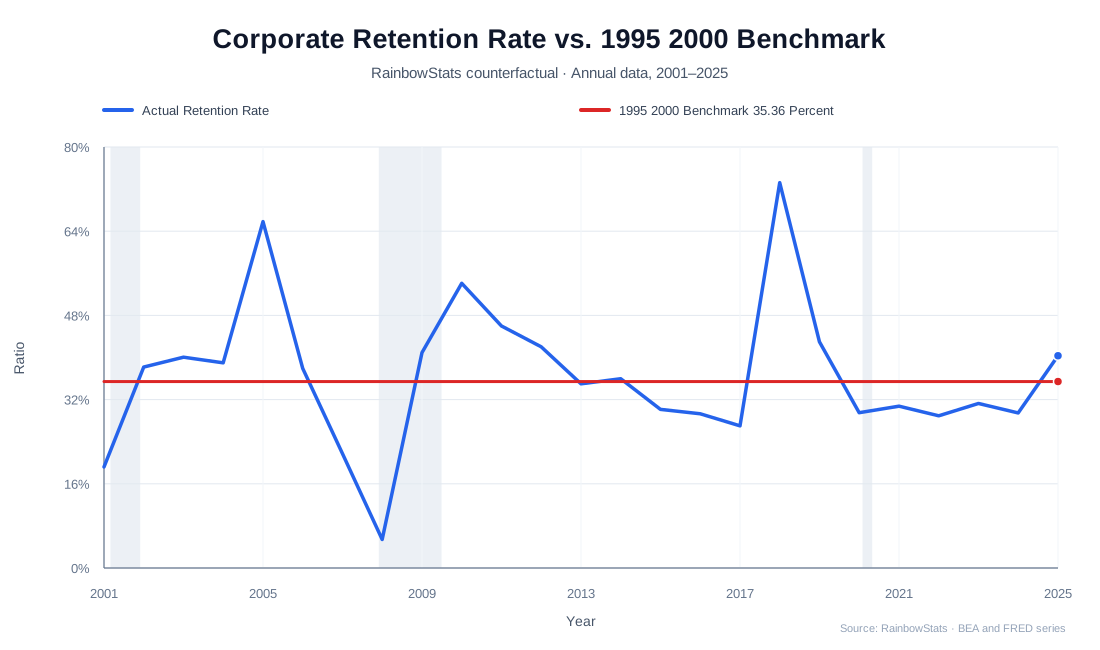
This RainbowStats exercise treats the aggregate corporate retention rate from 1995 through 2000 as the benchmark. For each year from 2001 through 2025, retained earnings above that benchmark are treated as potential additional dividends. Four assumed effective federal tax yields—5%, 10%, 15%, and 20%—are then applied to those incremental distributions.
1. Establishing the retention benchmark
The first slide compares the actual corporate retention rate with the 35.36% benchmark. Actual retention varies substantially, so the counterfactual does not assume that every year produces taxable excess. By 2025, however, the actual rate is about 40.23%, nearly five percentage points above the benchmark.
2. Translating excess retention into dividends
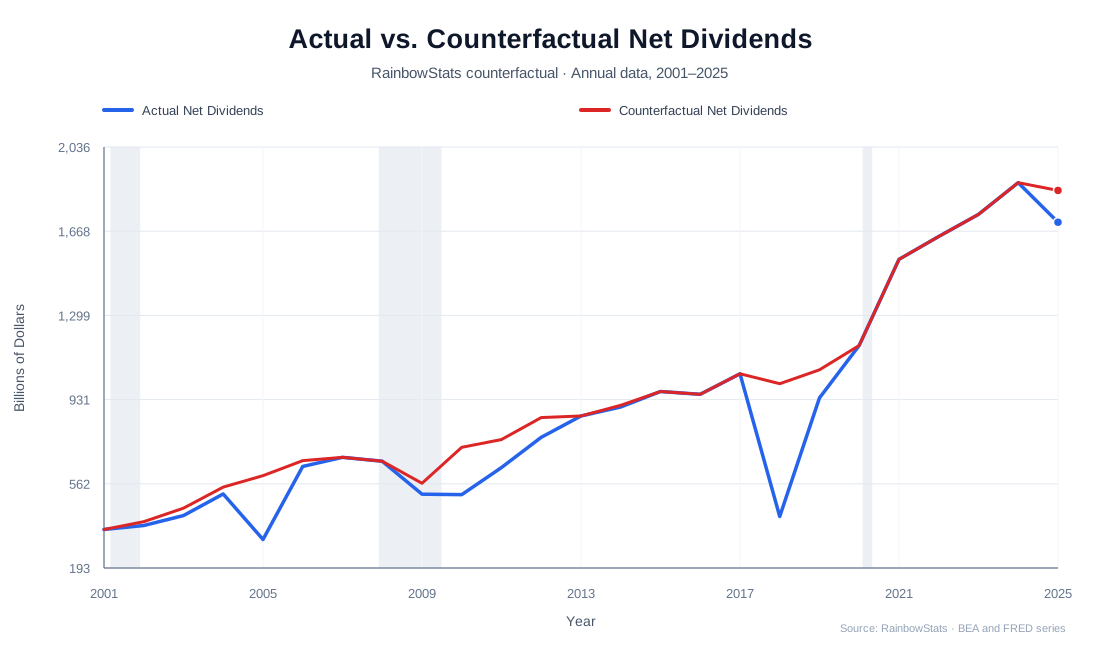
The second slide converts positive excess retention into hypothetical additional dividends. This is the strongest behavioral assumption in the exercise: every dollar retained above the benchmark is assumed to become a dollar of additional net dividends. In 2025, actual net dividends are about $1.707 trillion; the counterfactual is about $1.846 trillion, a difference of roughly $139 billion.
3. Measuring the annual deficit reduction
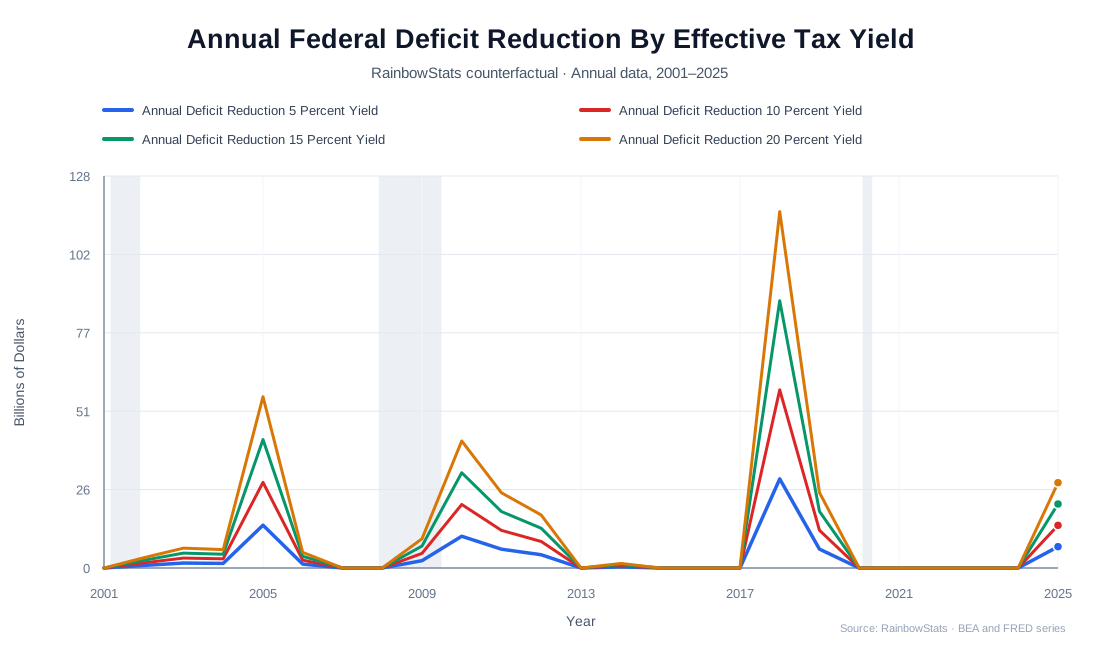
The third slide applies the four effective federal tax yields to the additional dividends. This is the actual annual deficit effect in the model. In 2025 the estimated deficit reduction ranges from only $7.0 billion at a 5% yield to $27.8 billion at a 20% yield. The central 10% case produces about $13.9 billion.
That is the central result: even when the behavioral assumption generates a sizable new dividend stream, the federal revenue is modest because only a fraction of that stream becomes tax receipts.
4. Accumulating the direct revenue
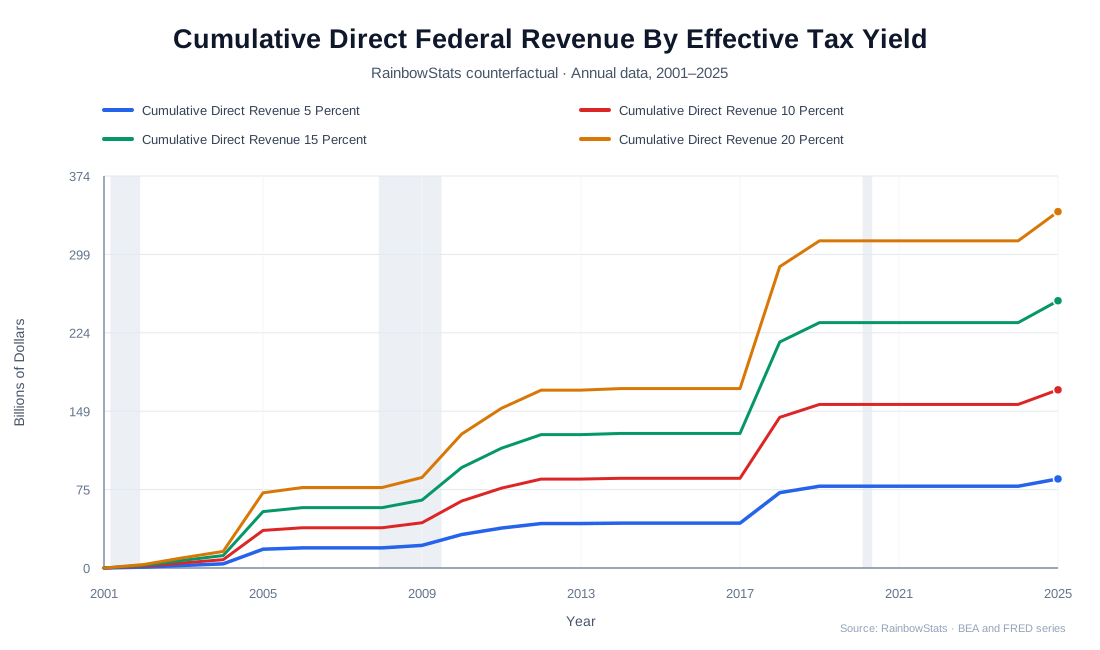
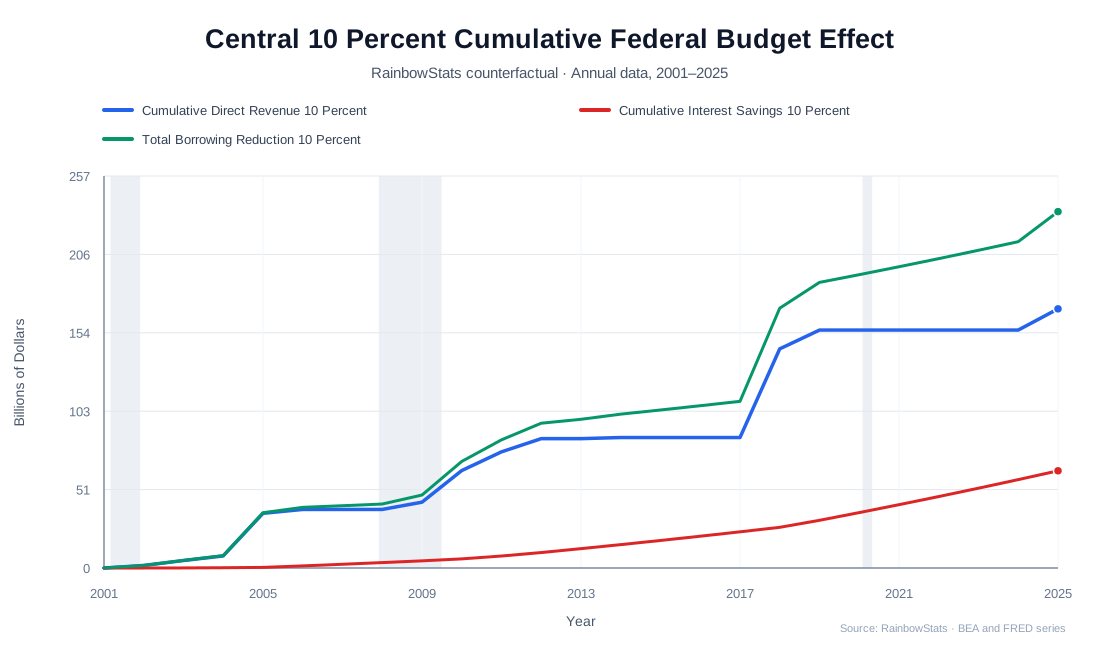
The fourth slide adds the annual receipts without interest. Across the full 2001–2025 period, cumulative direct revenue ranges from $84.9 billion at a 5% effective yield to $339.7 billion at 20%. The 10% central case totals $169.9 billion.
5. Adding the avoided interest
Deficit reduction also lowers future interest expense. At the assumed 2.7% rate, the central 10% case produces about $63.7 billion of accumulated interest savings. Added to $169.9 billion of direct revenue, total borrowing is lower by approximately $233.6 billion after 25 years.
6. Comparing the four cumulative borrowing outcomes
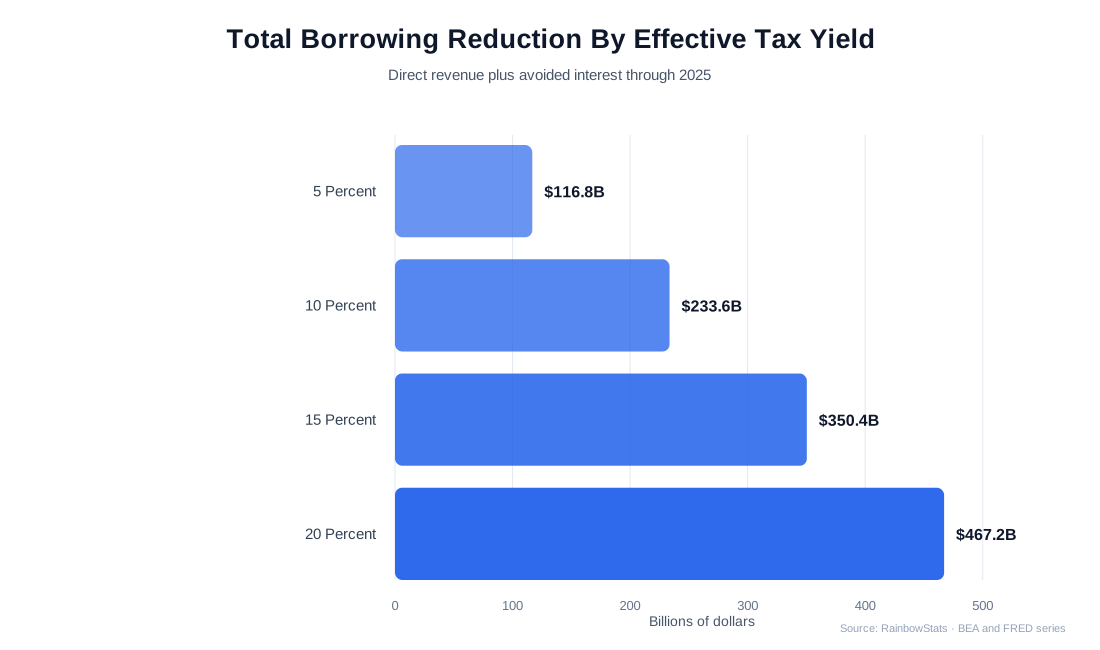
The sixth slide summarizes the terminal borrowing reduction. The totals scale almost mechanically with the assumed effective tax yield: $116.8 billion at 5%, $233.6 billion at 10%, $350.4 billion at 15%, and $467.2 billion at 20%.
| Effective tax yield | Direct revenue | Total borrowing reduction | 2025 debt/GDP reduction |
|---|---|---|---|
| 5% | $84.9B | $116.8B | 0.39 pp |
| 10% | $169.9B | $233.6B | 0.78 pp |
| 15% | $254.8B | $350.4B | 1.17 pp |
| 20% | $339.7B | $467.2B | 1.56 pp |
7. Putting the result against the federal debt
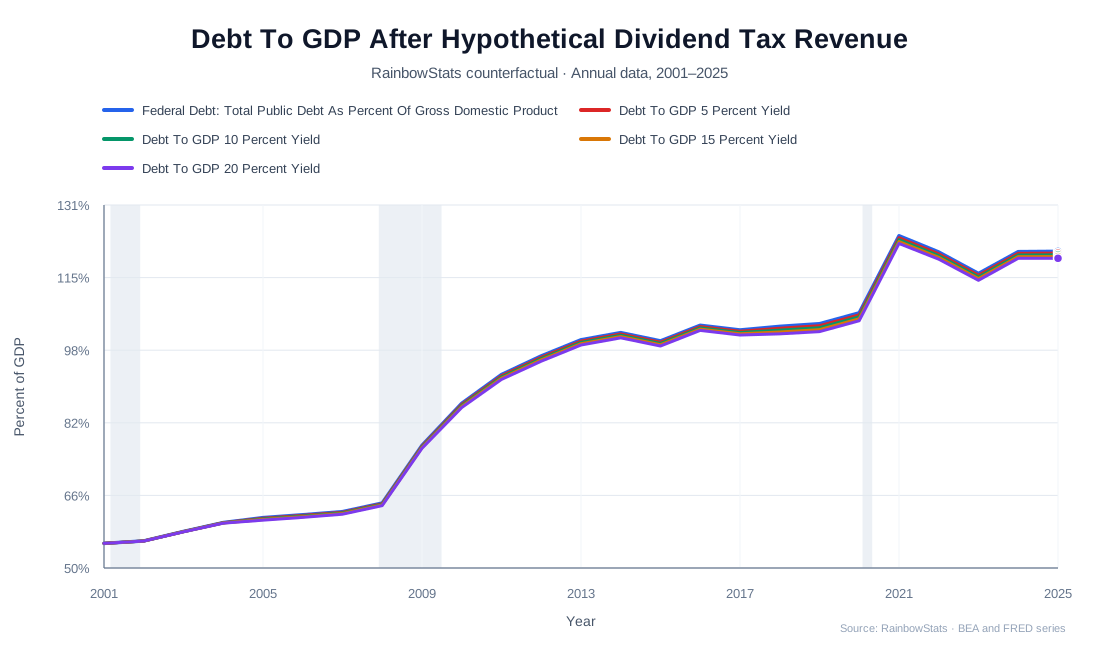
The final slide places those savings against the scale of the federal debt. The baseline 2025 debt-to-GDP ratio is about 120.55%. The 5%, 10%, 15%, and 20% cases lower it to approximately 120.16%, 119.77%, 119.38%, and 118.99%, respectively.
The lines nearly overlap because the policy’s cumulative revenue is small relative to both GDP and the outstanding debt stock. Even the most aggressive modeled case changes the ratio by only 1.56 percentage points after a quarter century.
Conclusion: a weak fiscal instrument
A retained-earnings penalty might be defended on corporate-governance, capital-allocation, or distributional grounds. This exercise does not test those arguments. It tests the narrower fiscal claim—and on that measure the policy disappoints.
The central case reduces annual deficits by relatively small amounts and cumulative borrowing by about $234 billion over 25 years. Even doubling the effective yield to 20% leaves the 2025 debt ratio near 119% of GDP. That is measurable, but it is not transformative.
Moreover, the counterfactual already assumes that all positive excess retention becomes additional dividends. Real-world avoidance, foreign and tax-exempt ownership, changes in payout policy, and reduced corporate investment could make the realized revenue smaller. A separately collected penalty tax could raise additional money, but it could not simply be added to the dividend-tax estimates without modeling the resulting behavioral changes and avoiding double counting.
The evidence from these slides is therefore clear: penalizing retained earnings is not a meaningful stand-alone solution to the federal deficit.
Data and construction: Corporate after-tax profits and retained earnings are annual BEA series W273RC1A027NBEA and W274RC1A027NBEA. Federal debt-to-GDP is GFDEGDQ188S; nominal GDP is GDP. Calculations and charts were produced in RainbowStats. Values are a stylized counterfactual, not a revenue forecast.