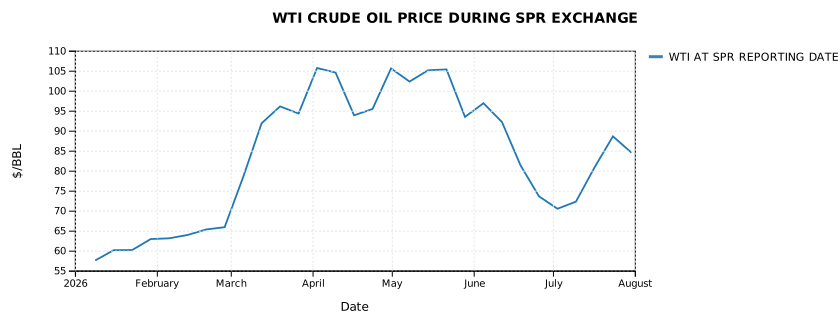
The rapid drawdown of the Strategic Petroleum Reserve (SPR), combined with the prolonged conflict involving Iran, has prompted warnings that the United States is exhausting an important defense against future oil shocks. I am not an oil-market specialist, but I can examine the exchange as a market transaction and ask the old question: Cui bono? Who benefits?
Open the RainbowStats script used in this analysis.
The effective closure of the Strait of Hormuz sharply reduced the flow of crude oil and petroleum products from the Persian Gulf. The resulting supply disruption pushed oil prices higher and led the International Energy Agency to coordinate the largest emergency stock release in its history. The United States committed 172 million barrels from the SPR as part of that action.
As deliveries began, the amount of crude held in the SPR fell rapidly. This decline is real, but it does not tell the whole story because the 2026 program was structured primarily as an emergency exchange rather than an outright sale.
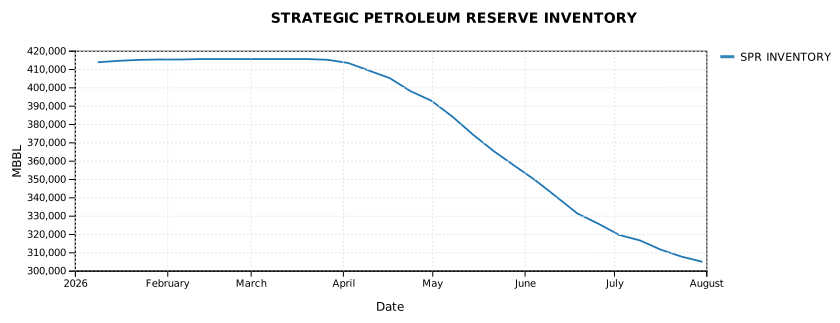
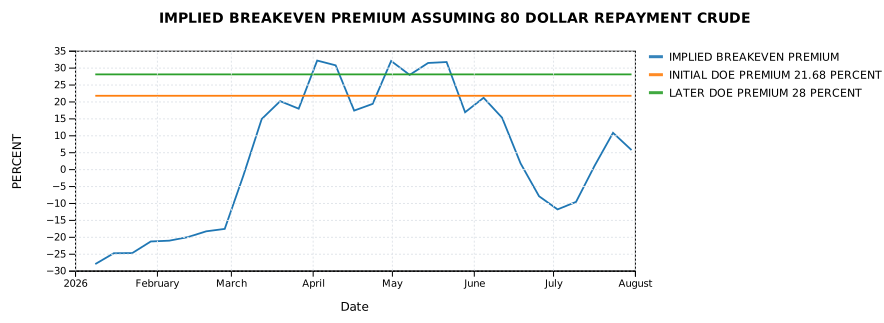
In an SPR exchange, participating companies receive crude oil now and agree to return an equivalent quantity and quality later, together with additional “premium barrels.” Those extra barrels function much like interest paid in kind. In one May award, the Department of Energy exchanged 53.3 million barrels and secured an additional 15.1 million barrels—an approximately 28 percent return premium.
The repayment obligation creates an economic exposure similar to being short crude for future delivery. A participant can reduce that risk by purchasing forward contracts for the expected repayment date. Consider a simplified example in which crude received from the SPR is worth $100 per barrel today and replacement crude can be purchased forward for $80 per barrel. Ignoring transportation, quality differences, financing, and other costs, the breakeven premium is:
At a 25 percent premium, the future cost of returning 1.25 barrels at $80 per barrel is $100—the same value as the barrel received today. This simple relationship helps explain why a large premium can still be economically reasonable when the crude-oil forward curve is steeply backwardated, meaning future prices are below spot prices. It is an illustration, not a complete valuation of any individual contract.
The second part of the analysis concerns refining margins. Crude oil is processed into products that include gasoline, diesel, and jet fuel. A commonly used indicator of the gross refining margin is the 3:2:1 crack spread, which assumes that three barrels of crude produce two barrels of gasoline and one barrel of distillate.
Here, G is the gasoline price per gallon, D is the distillate price per gallon, and C is the crude-oil price per barrel. The factor of 42 converts gallons to barrels, and dividing by three expresses the result per barrel of crude input. I use Gulf Coast spot prices because the SPR storage sites and much of the associated refining capacity are located on the Gulf Coast. WTI serves as a transparent crude-price proxy. Jet fuel is economically relevant to refiners, but it is not a separate leg of the standard 3:2:1 calculation.
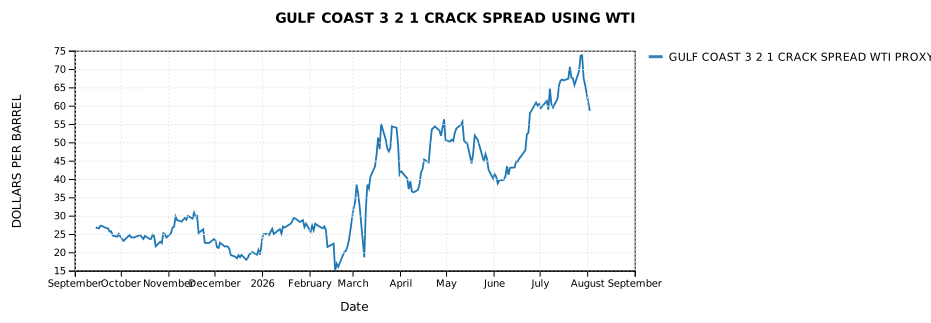
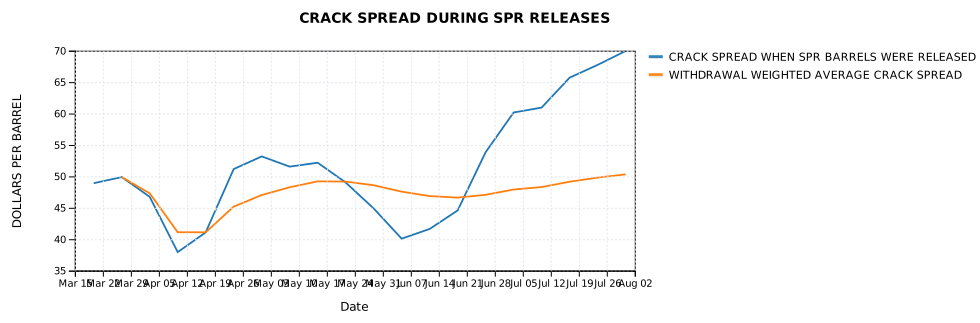
The next chart aligns weekly SPR withdrawals with the estimated crack spread. Weighting the spread by the number of barrels released provides a rough measure of the gross refining-margin environment during the exchange. It does not establish that the SPR release caused the higher spread.
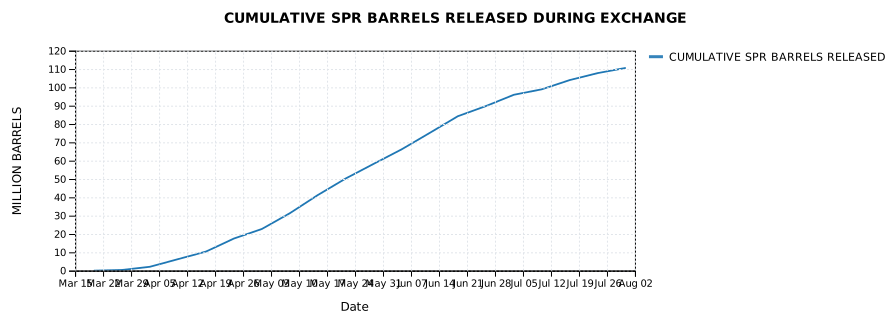
The cumulative withdrawal series shows how quickly barrels moved from the reserve into the market.
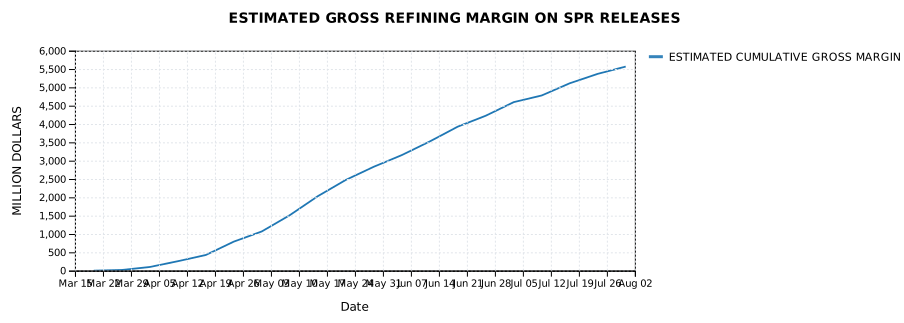
Multiplying the estimated crack spread by the cumulative volume released produces a gross refining-margin estimate of roughly $6 billion.
The exchange gave participating companies immediate access to scarce crude during a period of unusually strong refining margins. It also supplied additional oil to the market, which should have reduced prices relative to what they otherwise would have been. If the contracts are fulfilled, the SPR will eventually receive the borrowed barrels plus the agreed premium barrels.
The remaining concern is timing. Until the replacement barrels are returned, the United States has a smaller emergency buffer. Like an accumulator that dampens pressure changes in a hydraulic system, the SPR can moderate a sudden supply shock only if sufficient inventory and delivery capacity remain available. A smaller reserve therefore leaves the market more exposed to another disruption, although it does not by itself guarantee higher prices or greater volatility.
Does this transaction create an asymmetric payoff for a refiner that hedges its repayment obligation? The refiner receives crude during a shortage, can lock in the cost of returning it, and may retain the upside from wider product margins. This is not literally a free call option: the premium barrels impose a cost, while basis, timing, transportation, and operating risks remain. Nor do higher crude prices alone guarantee greater refinery profits. Nevertheless, the structure may give refiners valuable optionality just as the public assumes the risk of a smaller reserve during a prolonged war. I would welcome the views of refiners, traders, and other oil-market participants.
So who benefits? Refiners gain access to crude and may capture attractive gross processing margins; the government receives premium barrels if repayment occurs; and consumers benefit from additional near-term supply. The trade-off is that some of the nation’s insurance against a second shock is temporarily committed. That—not the inventory decline alone—is the central economic risk of the exchange.
Sources: U.S. Department of Energy exchange awards, U.S. Department of Energy explanation of SPR exchanges, U.S. Energy Information Administration explanation of crack spreads, and International Energy Agency analysis of the Hormuz supply shock.