Bundick and Petrosky-Nadeau argue that persistent employment dynamics make monetary policy history-dependent. In their calibrated nonlinear model, adding an employment mandate reduces inflation volatility by 26%. RainbowStats does not yet solve nonlinear DSGE models. It can, however, examine the model indirectly: reproduce its public-data setting, estimate the dynamic system with VAR_MODEL, trace shocks, and test whether COVID marks a structural shift.
The distinction matters. The paper’s 26% is a counterfactual model result, not an observed historical reduction. Our analysis asks a narrower question: does the U.S. record contain the dynamic channel the model requires?
The model we can test indirectly
The paper’s mechanism begins with persistence. Employment is a stock: lost matches are rebuilt slowly. A central bank that responds to unemployment therefore inherits that persistence. Households and firms anticipate future accommodation after a demand shock, which can dampen today’s inflation response.
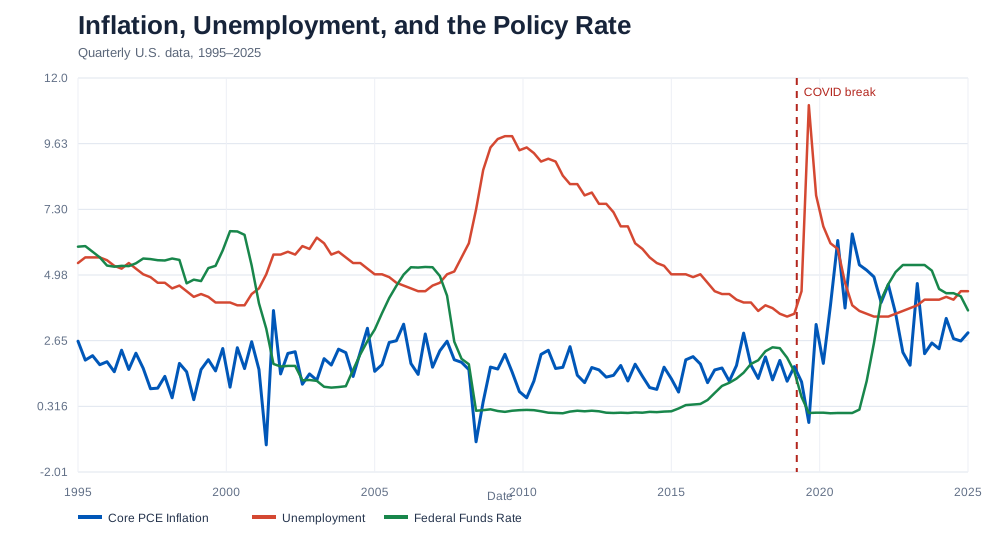
We estimate a four-variable quarterly VAR over the paper’s pre-pandemic window, 1995Q1–2019Q4. The system contains annualized core PCE inflation, unemployment, the effective federal funds rate, and annualized labor-productivity growth. Four lags allow one year of feedback among every variable.
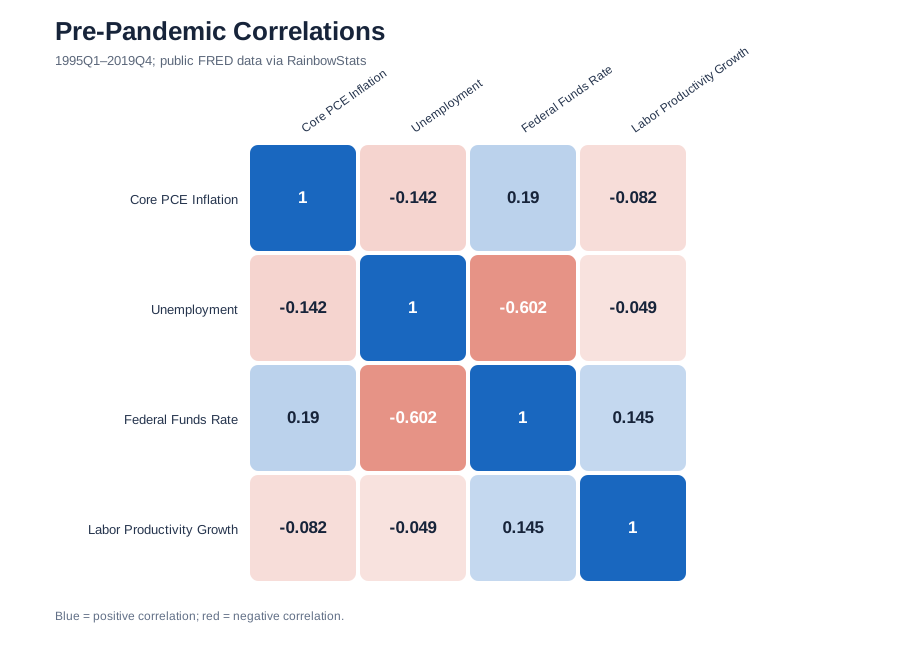
The VAR finds the dual-mandate channel
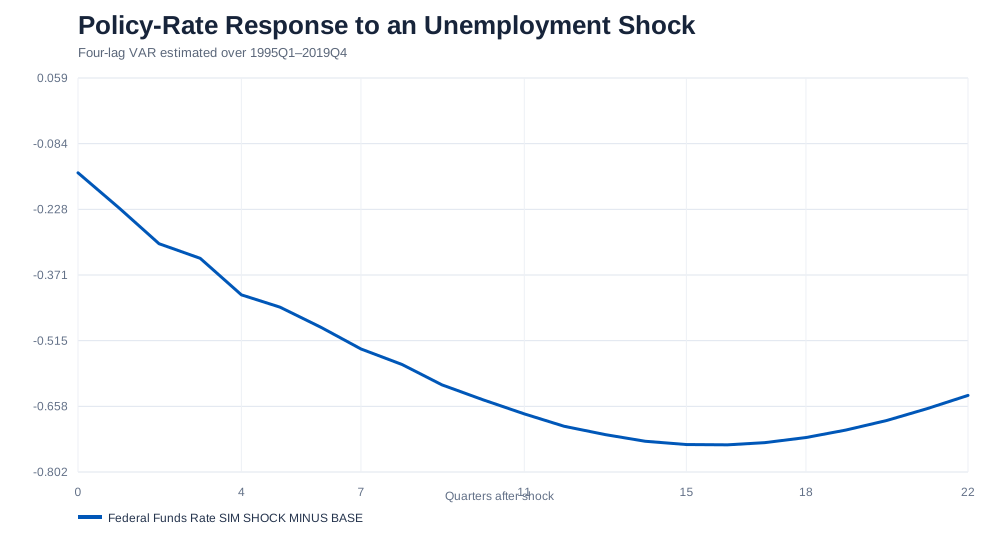
A one-percentage-point unemployment shock leads the VAR to lower the modeled federal funds rate immediately. The response becomes more negative for several years before fading. That is exactly the feedback channel a dual mandate requires: weakness in employment affects the expected future path of policy.
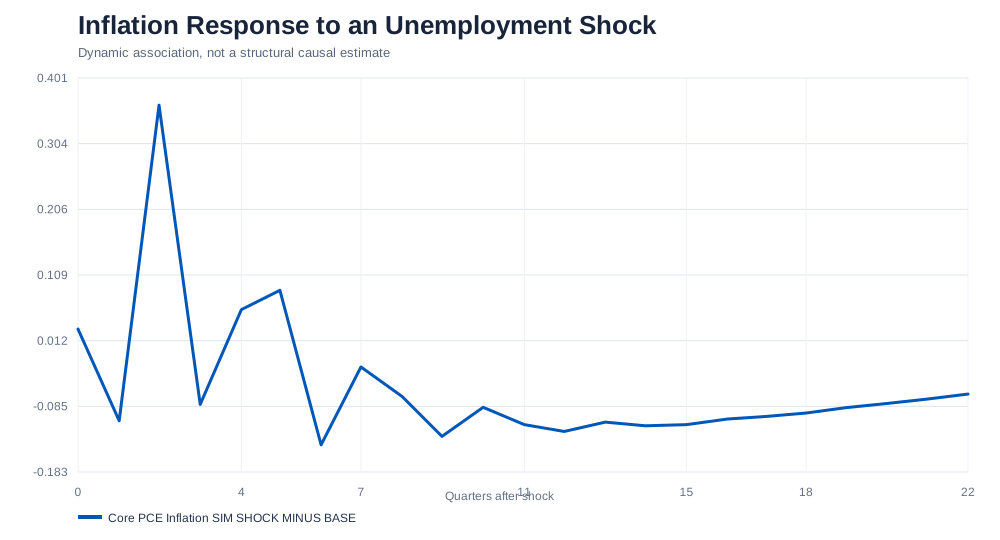
Inflation’s response is less orderly. It oscillates at first and then settles modestly below baseline. This is consistent with a complex lag structure, but it is not a clean empirical counterpart to the paper’s model impulse response.
The price puzzle is the warning label
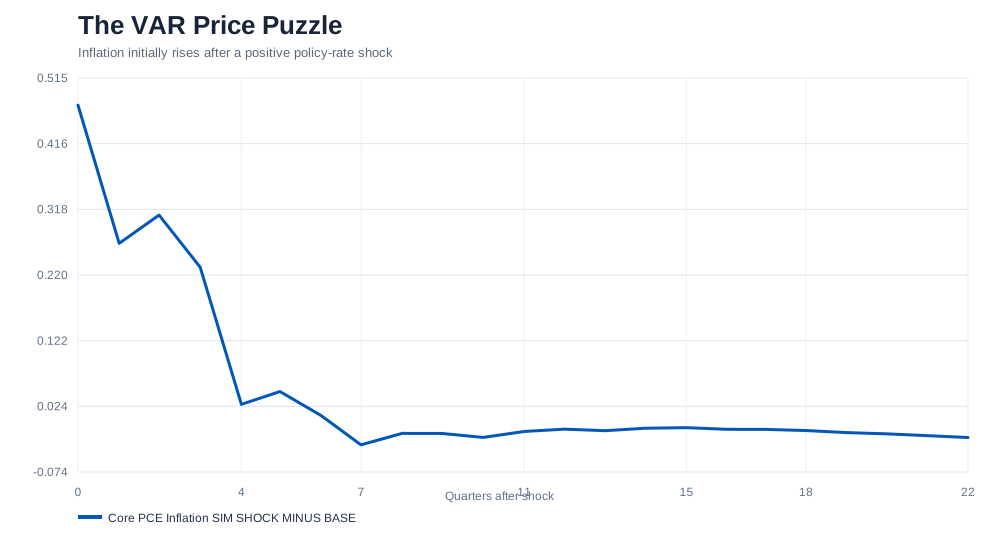
When we shock the policy rate upward, modeled inflation initially rises rather than falls. Economists know this as the VAR “price puzzle.” The central bank often raises rates when it sees inflationary pressure that is missing from a small VAR; the rate increase can therefore appear to predict inflation rather than suppress it.
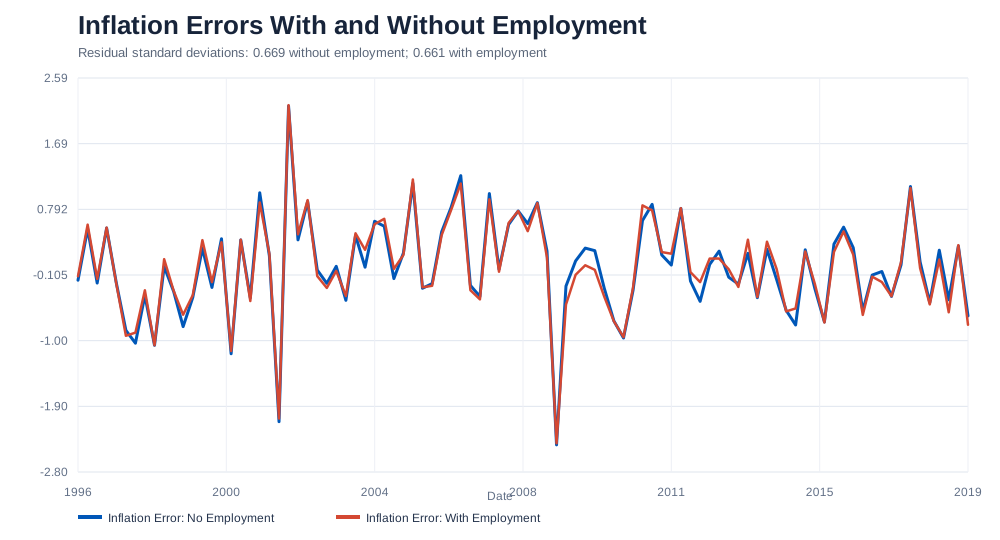
How much does employment improve the inflation equation?
To make the comparison transparent, we reconstruct the inflation equation from the VAR twice. The first version uses four lags of inflation, the policy rate, and productivity growth. The second adds four lags of unemployment. Inflation residual volatility falls from 0.669 to 0.661—about 1.1%, not 26%.
What COVID changes
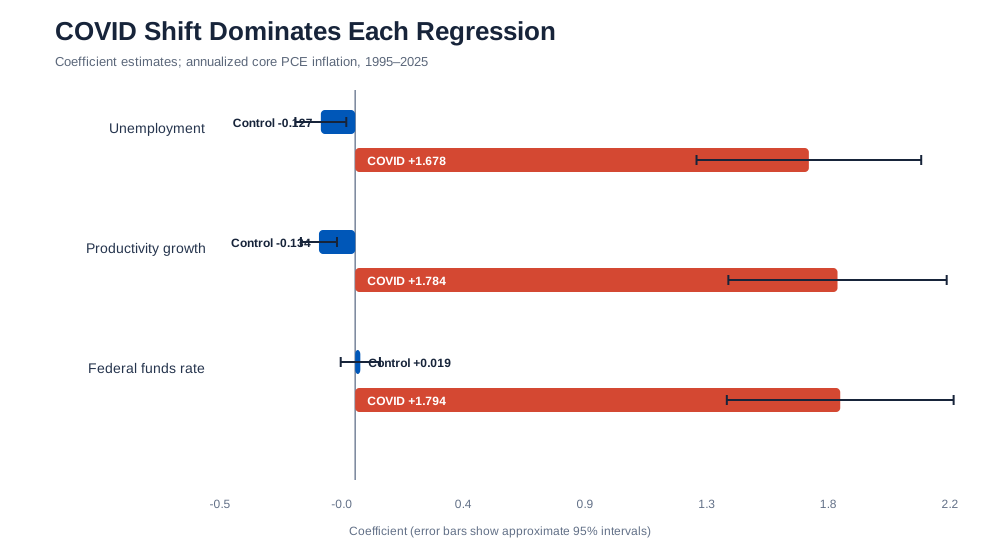
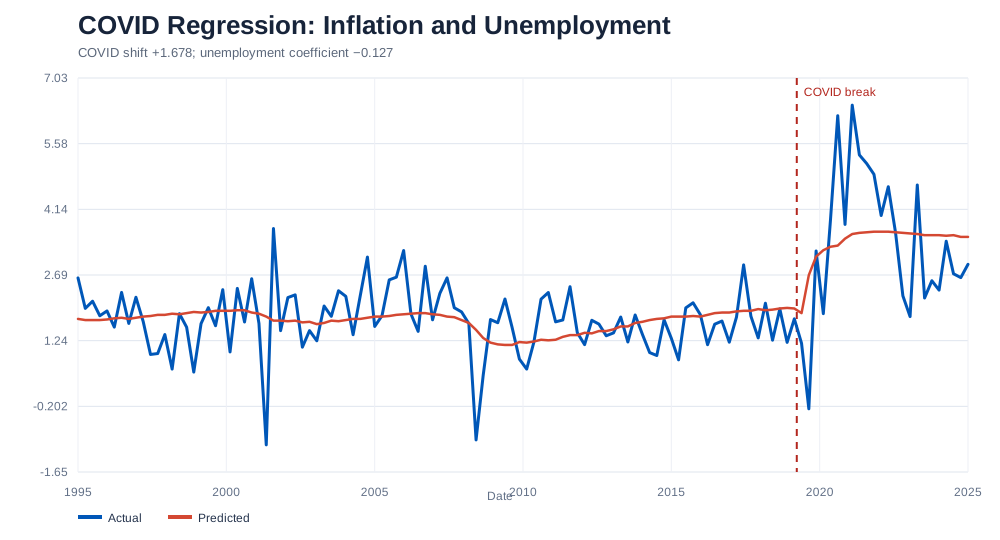
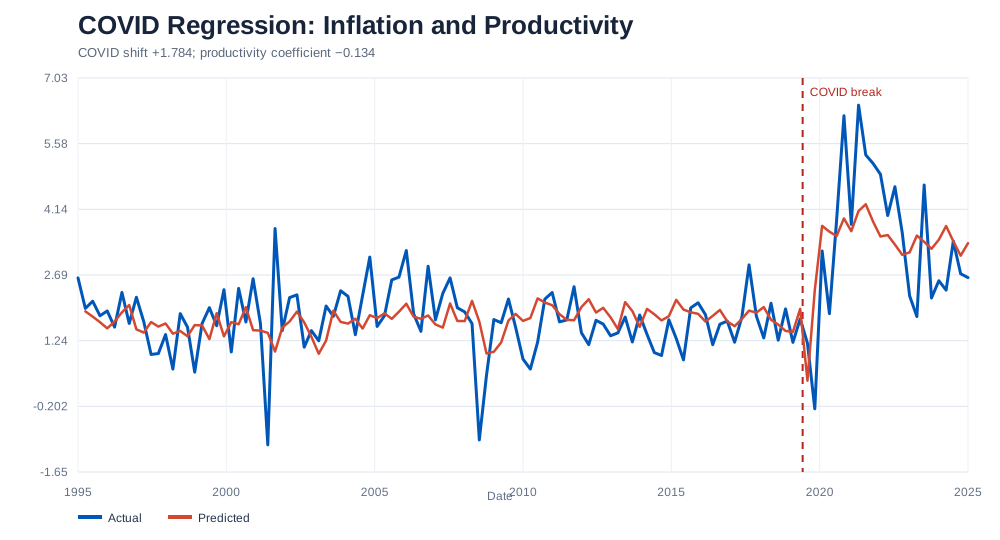
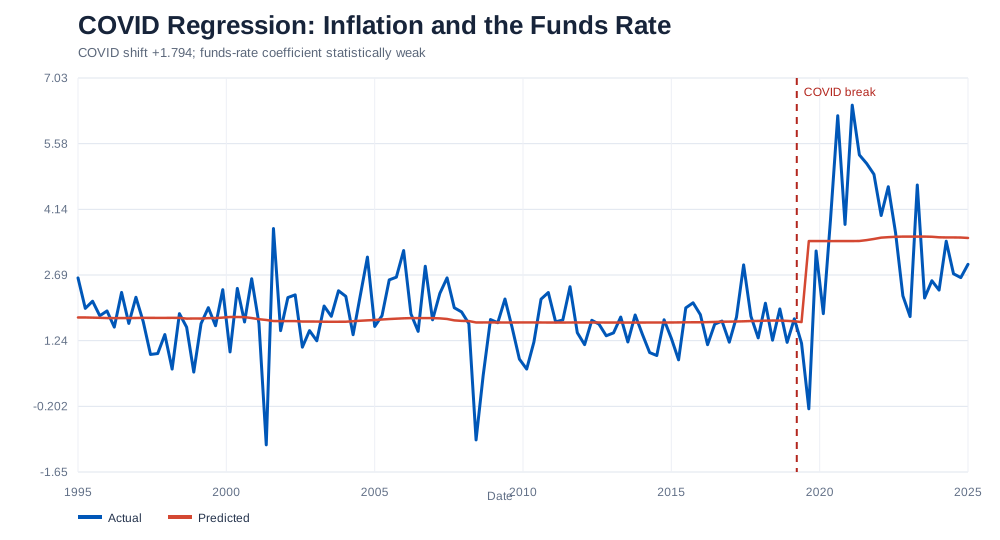
The original paper intentionally ends in 2019. RainbowStats’ REGRESSION_COVID lets us extend through 2025 while explicitly estimating a pandemic-era level shift. Focused two-variable specifications avoid pretending that one large regression can separately identify every pandemic channel.
| Inflation control | Control β | Control t | COVID β | COVID t | Adjusted R² |
|---|---|---|---|---|---|
| Unemployment | −0.127 | −2.669 | +1.678 | 7.903 | 0.391 |
| Productivity growth | −0.134 | −3.905 | +1.784 | 8.676 | 0.431 |
| Federal funds rate | +0.019 | 0.508 | +1.794 | 8.398 | 0.356 |
Conclusion: the mechanism survives, the magnitude does not
Our evidence is partly supportive and partly at odds with the paper. The VAR confirms that employment weakness produces a persistent policy response—the history-dependent channel is visible in the data. But adding unemployment produces only a small improvement in the empirical inflation equation, while COVID regressions reveal a large post-2020 shift that ordinary labor-market and policy variables do not absorb.
The most defensible conclusion is therefore narrower than the model’s: a dual mandate can create stabilizing history dependence, but observed U.S. data do not independently verify a 26% reduction in inflation volatility. The pandemic evidence also reinforces the paper’s own warning that supply shocks break the equivalence between a dual mandate and average-inflation targeting.
Sources and limitations
The motivating paper is Brent Bundick and Nicolas Petrosky-Nadeau, “A Dual Mandate Can Support Price Stability,” Federal Reserve Bank of San Francisco Working Paper 2026-17. Data are public FRED series: PCEPILFE, UNRATE, FEDFUNDS, and OPHNFB. VAR shock paths are reduced-form simulations and are not structurally identified impulse responses. COVID coefficients identify a time break, not its economic cause.